

Ad agencies on Substack—why Mischief is betting on its own platform
Ad Age's Jeanine Poggi interviews Mischief's Oliver McAteer on treating agencies like brands, how to navigate vague CMO directives and how Mischief is implementing AI.


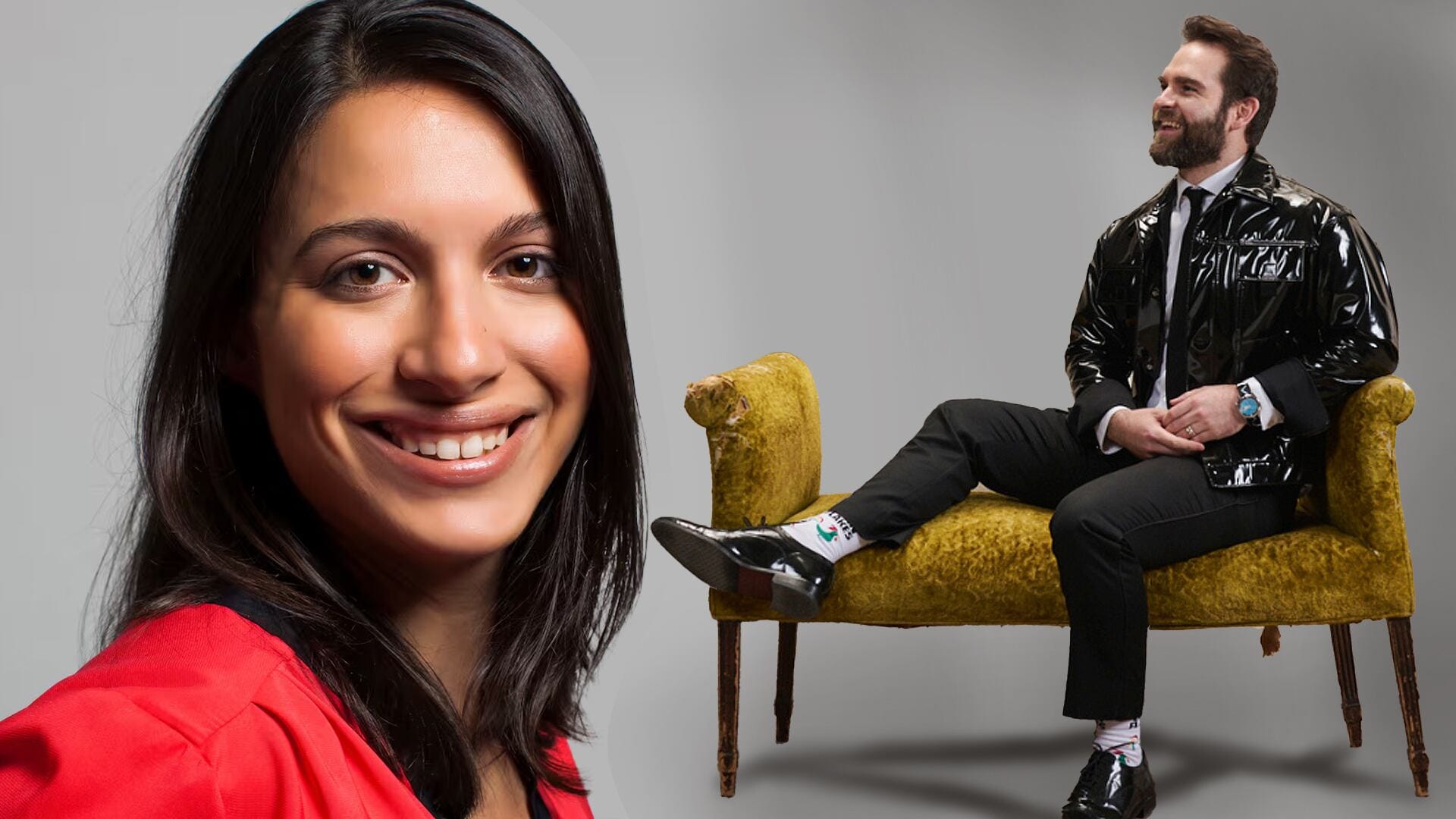
Ad Age is excited to join Substack as a source for advertising, marketing and media news as well as to partner with creative voices who are experimenting with new forms of content creation and distribution. Below, Ad Age Editor-in-Chief Jeanine Poggi interviews Oliver McAteer, partner and head of development at marketing agency Mischief, on why the agency is investing in Substack, navigating vague CMO directives and what defines “brave” work.
Follow Ad Age on Substack for news briefings, interviews and additional exclusive content. To pitch collaborations or contributions for Ad Age’s Substack, please email us here. This interview has been lightly edited for length and clarity.
Why Mischief treats itself like a brand
Jeanine Poggi: I’m really interested in why agencies are starting to build their own platforms. What made this the right moment for Mischief to create a Substack?
Oliver McAteer: We’ve always treated Mischief like a brand with its own look and feel. It’s important to help differentiate yourself from the sea of sameness.
And, look, I love Ad Age—but the agency-to-trade math doesn’t math. There are around 100,000 agency-like entities in the U.S. alone, and only a handful of trade journalists who can tell your agency story every once in a while. Agencies have no choice but to own their own narrative. For us, it’s all about being known before you’re needed. We want to create a draw for the right kind of marketer who needs what we do and knows who to call when the time is right.
Who do you actually imagine reading this on a regular basis?
Marketers, agency people and anyone interested in all things advertising (you don’t have to be in it to find it fun—that’s why a lot of our content is made for everyday normies).
Is this meant to be a marketing tool for the agency, or something more editorial and independent?
It’s meant to be a positive rallying cry for why our industry is so important: powerful strategy and original creativity can truly solve the chewiest business problems with tangible results. If this helps underscore the value of creativity even 0.01% at a time when it’s never been more under attack, then it’s doing its job.
How honest can an agency’s Substack really be, given client relationships and business realities?
That depends on how tight the client relationships are. For us, it means being weirdly honest—we wouldn’t have launched one if we couldn’t be. It needs to be a home where we can lay bare the business problems and what it takes to solve them, warts and all. Anything else is polished propaganda. We are able to do this because marketers know what they’re getting into when they work with Mischief. It’s in the name.
On brave work, messy briefs and what’s really changing
There’s always a lot of conversation about “brave work,” but when you look at what actually gets made, it can feel more incremental. Is that fair?
“Brave” does get thrown around a lot in our industry, I have to say. But I think bravery is somewhat subjective, and means different things to different brands. Brave isn’t always big and attention-grabbing for the masses. Sometimes it’s just a simple reframe that appeals to a tiny-but-important B2B audience.
When you talk to clients right now, do they feel clearer on what they want or more unsure than they were a few years ago?
Great Q. You must be a journalist or something. Largely, honestly, I don’t think this has changed in recent years: marketers either come with a razor-sharp ask, an open-ended “let’s make culture” or something in between. Any version is good, so long as they’re willing to work together to really figure out the problem we’re trying to solve. The most important part of our job is figuring out what we’re trying to say before we decide how to say it in the most interesting way.
Where are clients genuinely getting better, and where are they still the same as they were five years ago?
Interestingly, we’re seeing clients having more and more sway with procurement these days. If the marketing team wants an agency, they will go to bat for them internally. They’ve become our biggest champions for changing decades-old procurement systems like switching from rate cards to deliverables-based pricing (because we don’t do timesheets HALLELUJAH).
What hasn’t changed—which I love—is the desire to swing big. There will always be those marketers who want to play to win, regardless of the macro-economic environment. That’s why, when it comes to new business, we look for people instead of brands or categories.
What breaks as agencies grow
As agencies grow or evolve, what tends to break first?
Spirits. Spirits of the people who work there and ultimately the entire agency. I think this happens because, as you grow, there is pressure to take on more for the sake of growth. But partnering for the wrong reasons is the worst thing an agency can do for business. It crushes culture, usually leads to ignorable work and a limp case study that doesn’t draw in the kind of client you want, sparks talent leaks and a short client relationship. Then you’re back to square one. Or behind. We believe that if you focus on what makes you special, the money will come. But when you focus on the money, you cease to become special.
How is AI actually showing up in the work right now, not the talking points, the real use cases?
Some agencies and brands are all in with AI as an end-to-end solution (you know the ones). For us, it’s not showing up that much in the final product. It is really helping on the input stage of our creative process. Think comps to quickly illustrate how an idea could look and feel, or voiceover for the same effect. Basically, all the heavy lifting we did manually, that’s now saving us time to focus on human strategy and creativity.
On the output side, we’ve seen it helpfully navigate challenges. For example, when we launched global work for Tinder, the OOH portion was ideated and executed by people and photographers and a real shoot etc. But we needed a backdrop that did the job of adding versatility to each concept while bringing cohesion throughout, we used AI. It produced countless versions at a high volume, which is what we needed for more than ten markets around the world.
Interestingly, though, I don’t think the industry has seen a case study where AI has been used end-to-end and real business metrics have actually been moved.
 | A guest post by
|
Let your “mischief” shower success on success. Please find an article which will intrigue you. Not surprisingly! An AI adventure - https://substack.com/@uxlivinglab/p-193230601