

How Netflix decides which brands belong in its shows
Listen to the latest episode of Ad Age's Marketer's Brief podcast


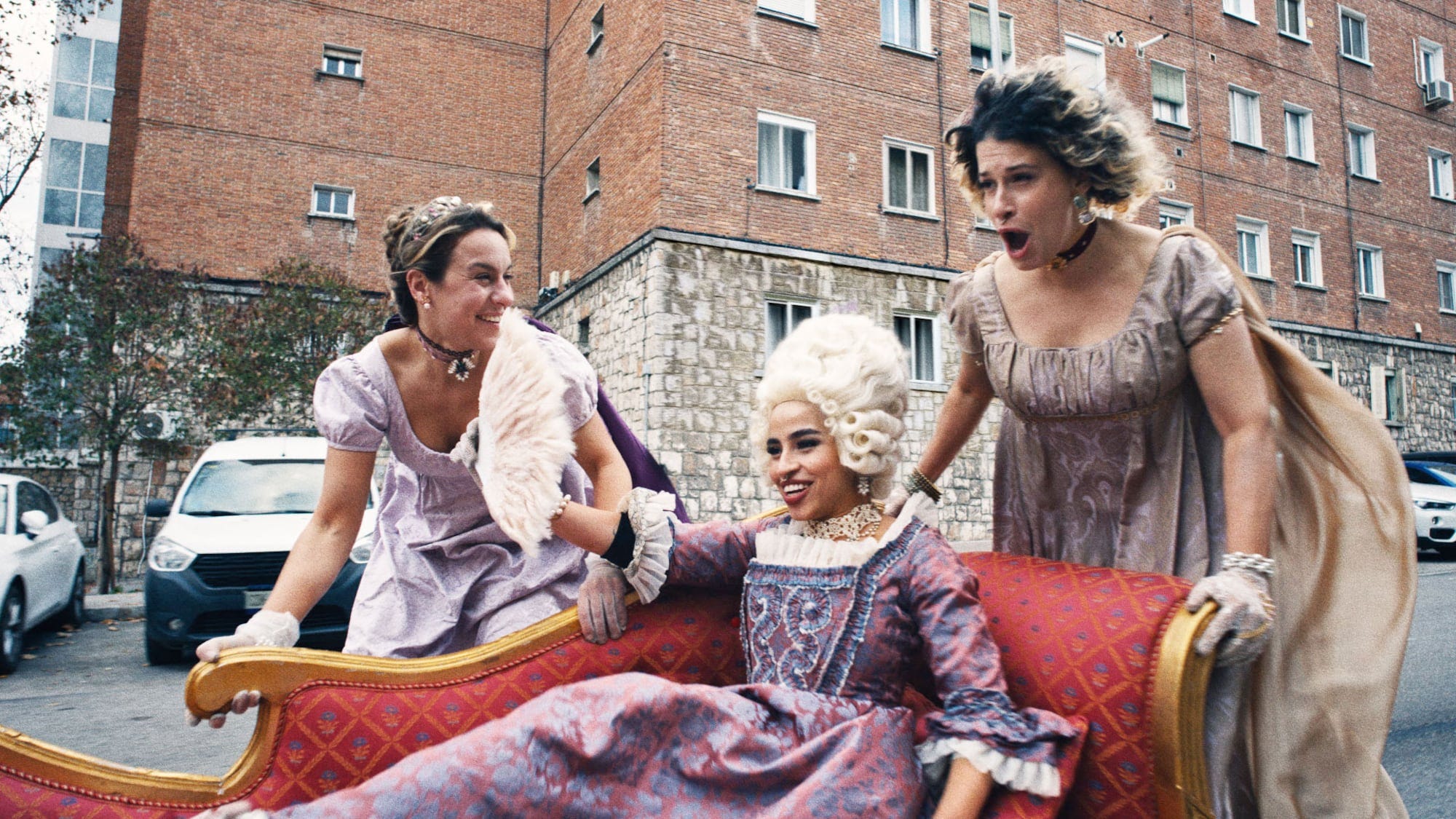
In this episode, Marketer’s Brief host Brandon Doerrer interviewed Magno Herran, VP of global brand marketing and partnerships, Netflix. Listen below, or read the transcript, which has been lightly edited for clarity.
Subscribe to the Marketer’s Brief podcast on Apple Podcasts, Spotify, Amazon Music/Audible and YouTube Music.
How Netflix brand partnerships come together
Brandon: Since the start of the year, you’ve helped lead a number of campaigns and brand partnerships between Netflix and various brand partners. There was a McDonald’s “KPop Demon Hunters” collaboration recently, “Bridgerton” and Dove, “Running Point” and State Farm, and a variety of other brand partners. Maybe we can start by talking a little bit about how these partnerships come together. Who approaches whom? How do these deals actually formulate, since I know a big part of your job is putting these together?
Magno: There are so many ways into these things. There’s certainly the stance where we are very proactive about it—where we take a look at a script, identify moments and then think about potential brands that have either done interesting work in culture or are willing to take big risks. Then we approach them with an idea, and it goes from there.
There are instances where brands come to us, and they’re like, “Hey, listen, we fell in love with that series or that show, and we want to be a part of it.” Then we start thinking about whether there is an authentic match between them and try to find a space in between.
And then “Running Point,” because you mentioned upfronts, is a really interesting one. It was a conversation with the State Farm team at our upfronts, with Bela [Bajaria], our chief content officer. That sparked a conversation, and then we landed where we landed. So there are multiple ways in, but at all times it requires a lot of understanding of the brands and what they’re trying to accomplish, understanding the series and the fandoms associated with them, and trying to find these unique intersections that you couldn’t do with any other brand.
Brandon: Can we actually walk through, using the State Farm–“Running Point” partnership as an example, how it formed from the early conversations all the way to the campaign that rolled out and the way the brand appeared in the show? Since you mentioned that it happened at upfronts, can you walk us through how that partnership came to life?
Magno: State Farm has done such a good job of being really part of the sports world. They show up in and around all sorts of events, and because the show is so rooted in basketball, that’s what the original conversation was about. It was like, “Hey, listen, our team advertises in and around, sponsors all sorts of sporting events. You guys have this one show, you’re also going into live.” So it’s a very general conversation at that stage. There’s a ton of credibility from a brand like State Farm to participate in anything NBA-related.
Then the interesting stuff happens. We have an internal creative team that’s dedicated to finding those unique intersections that might make sense—trying to connect culture and conversations happening in the world with what’s happening in the shows themselves. That’s where the idea came from that Jake himself is such an iconic character. You see him walking around any of these sporting events, and he’s a celebrity in his own right.
And then the idea and the premise of the show itself: it’s this band of misfits that, at any given moment, are a liability to the team or to themselves, and [the protagonist] is trying to wrangle it all together. That’s where the spark came about, of, “We could bring in Jake and pair him with Travis, who is the biggest liability to the team, and build a whole campaign around that.” The appearance in the show itself is just a cameo, just a nod to the fact that he’s there. The storytelling really happens in the campaign that was created afterward.
Brandon: Do you always handle these partnerships in-house, or do you work with agencies or other partners on forming them?
Magno: We collaborate with partners. There was a partner on that one. We have an in-house creative team, and sometimes we do take the work on. Other times, we partner really closely with the creative agency and the brands themselves, and we share what we each bring to the table.
Our team is very much rooted in a creative bar that we think is going to resonate with the fans themselves of the shows—a deep understanding of the themes, characters and storylines, and how fans react to them. Then we work with the brands and sometimes their agencies; they have the best understanding of what the brand stands for and what the brand is trying to accomplish. That’s where that marriage comes together.
Brandon: Can we talk about how a partnership like State Farm and “Running Point,” where you’re integrating the brand into the show, differs from something like the “KPop Demon Hunters” and McDonald’s collaboration, where you co-create an ad in the style of the show?
Are there significant differences between trying to integrate a brand into one of your properties versus co-creating a spot and campaign together?
Magno: They’re similar in some ways. They’re similar in the fact that we always want to be idea-led. We always want to make sure there’s something to tell the fans of the show, or the people we’re trying to reach, that makes sense.
The integration piece just requires that extra layer of authenticity. If we’re going to put it into a show, it has to make sense for the storyline, and it can’t be disruptive. So we work really upstream, at the scripting stage, with the creators of the shows themselves to understand where something might make sense or not.
In the case of Jake, it just made sense because, like I mentioned, he’s so endemic. He does show up to basketball games, and his cameo was very much in that vein: he was showing up at a basketball game, a nod from [the protagonist] and the crew. Then the storytelling happens in the campaigns themselves, which are always co-created.
For us, the integration is just one element of a potentially bigger campaign rooted in a single idea that we think is going to resonate with fans of the show itself.
What Netflix looks for in brand partners
Brandon: What is the more common form of partnership for Netflix right now, and what is Netflix most interested in from a brand perspective? Is Netflix’s need changing in terms of what it looks for in a brand partner, or what are you looking for from your brand partners these days?
Magno: Our premise has stayed pretty true for the past several years. We’ve just been able to do it now at scale because the slate is so interesting, and we’ve gotten more traction in the market.
You hear this all the time: people seek authenticity; people seek to do things in a way that makes sense for the fans. You don’t want a logo slap—all these things you hear out in the marketplace. What we’ve been able to do is prove it out in the executions themselves. That’s why we pay such close attention, and we have this internal creative team and the folks talking to brands understand that you can’t just say you want to be authentic to a specific piece of a show or a fandom and do a partnership. You have to actually deliver on that promise.
The ambition hasn’t changed and the need hasn’t changed. We’re still seeking partners that want to take a big swing, that want to tap into the cultural conversation around these shows, that want to do it authentically and, most importantly, that want to co-create with us.
From there, we have all these different levers now. We could advertise on the ads tier and put an ad right in front of the show. What would that look like in context? How does that then translate to something that happens on social? If we do an integration because it makes sense, how does that connect to the broader story and campaign we’re trying to tell?
The root of the campaigns and the essence of what we’re trying to accomplish is the same; now we have more levers at our disposal to build these campaigns and make them travel in different ways.
Brandon: Can you go into a little more detail about the bar you set for brand partnerships? You mentioned you want brands that are going to tap into the culture around the show. What do you actually look for in terms of brands being willing to engage with the show beyond just throwing a product into the background?
Magno: Initially, it’s sometimes a painful part of the discussion. We spend a lot of time on the strategy portion of it because we’re always seeking creativity over volume. We want to make sure we have the right partners that are going to provide the right level of impact for the show itself, but also for the business needs of the brands. They come in with KPIs. Sometimes it’s sales metrics; sometimes it’s brand lift studies or affinity and things like that. We want to understand that very deeply before we even get into any creative conversation or agreement that we will participate together.
Once we understand that, we go into this phase of co-creating a nugget of an idea. Do we have territories that make sense? Does it feel authentic or not? In that process, you start understanding which brands really want to take this on and which brands just really want to give their logo and have us run it all over the show.
That is an interesting process in itself that takes some time. These partnerships take quite a bit of time; 18 months out is more typical—12 months out would be a scary one to take on. You think about something like McDonald’s and the amount of details in every single element that went into that. That takes time. That takes collaboration. That takes collaboration with Maggie [Kang] and Chris [Appelhans], the creators, to make sure they have their touch on what the campaign is.
It really is about spending that amount of time up front, understanding what brands are trying to accomplish and making sure we have the right fit to work together. We’re not afraid to say no, and that’s sometimes an unpopular opinion. It’s really not about being elitist; it’s that we want these campaigns to work, and we have a really good pulse of what the fans of the shows or films want to engage with. We just want brands that want to take part in that.
Brandon: What are the reasons you most commonly have to turn down a partnership, so listeners can maybe avoid some of that?
Magno: The biggest one is when it’s obviously not a natural fit for the show. It might be that that opportunity isn’t right, and we always keep the door open to come back to the table.
An electric vehicle in “Bridgerton” will never make sense. That’s a fairly obvious example, but you’d be surprised—sometimes these things come up. So it’s about saying, “You know what, that might not make sense for this opportunity, but let’s figure out another moment that does.”
The other one is: does the model make sense? Do you want to spend as much time collaborating on these things and making sure we have the right storytelling? Sometimes the answer naturally becomes, “You know what, not just yet, but let’s come back to the table when it really makes sense against some business objective.”
The door’s always open. We’re always having conversations. We’re really excited about upfronts, and the conversations will come, and we’ll highlight some of these examples.
The interesting part is that as we’ve built this body of work and are able to scale it now, not just in the U.S. but all over—Brazil, Mexico, Korea, Japan, all over Europe—we’re seeing the right metrics. We’re seeing that brand affinity is really paying off. We’re also seeing that lower-funnel metrics like purchase intent are moving the needle as well.
We’re starting to build a really interesting body of work that shows this process, this way of engaging, this high bar for creative execution in the spirit of serving the fans of the show they’re trying to reach, really does work when you spend the time and effort to do it right.
Marketing to young fans and competing for attention
Brandon: I wanted to talk a little bit about entertainment marketing and marketing these shows, looking at broader trends. What are some of the bigger challenges to marketing to fans of these shows, and how are you approaching these partnerships in ways that address these challenges?
When I think about young Gen Z fans watching these shows, you also have to compete with social media and the variety of other platforms they’re paying attention to. There was an IAB study that showed social ad spend, for the first time, is starting to outpace CTV ad spend. When you think about these challenges, are there particular ways that you approach these partnerships to address them? And what would you say are the biggest challenges right now?
Magno: You have to really understand the audience you’re trying to serve. For us, and why we think about all the levers we have at our disposal, it’s: what does an ad on Netflix look like? What should that be? In our mind, it should be as entertaining as the content itself. That’s a starting point for us. If you’re watching something on Netflix, you want to be entertained, and we really think about what that could look like.
Then we think about these bigger 360 campaigns we work with partners on and how they live on social. It’s not the same ad that you would run, just ported over, but there’s got to be an element that lives there. The McDonald’s campaign is a good example, where we really thought about every touchpoint. What does the custom animation look like? What does the music video we revealed at the end look like? How does that get distributed through McDonald’s channels as well to reach the right audience? How do the collectible cards take form, and how do we follow that collectible-card way of operating and make sure it’s authentic?
The biggest challenge is that all the consumers and fans of the shows we’re trying to reach are so sophisticated in the way they engage. It’s up to us as marketers to meet them where they are, in the channels they’re in.
We take great pride and effort in trying to make sure that, at every touchpoint, we have something that adds value to their experience and isn’t distracting from what they’re actually trying to do, which is engage with the shows or characters themselves.
Brandon: I would imagine this varies from campaign to campaign, but what does Netflix’s media mix look like these days?
Magno: It is, like you said, super partner-dependent. It starts with that early phase where we’re understanding what the goals are and what we’re trying to accomplish.
There’s no doubt that when you put an ad on Netflix right in front of the show itself, if you’re able to tell the right story, then it’s going to resonate quite well. It’s going to set you in the right frame of mind to then watch the show. We use that a lot as an anchor point for a lot of these campaigns.
Then we think more broadly: where can these things live? Where are those audiences? We custom-build the media mix very specific to each campaign.
An interesting one—also on Netflix, but in a different context because it was live—is we had an incredible collection of partnerships for “Stranger Things,” some that really went in-world and went back to the 1980s to tell unique stories. We had Gatorade, Tide, Target and a couple of others. We were able to put them together in a pod inside one of our NFL games. That was a really fun break for people to experience that, and then we figured out ways to tell that story on social as well.
We’re very creative with our partners and spend a lot of time co-creating even the media plans that go into these things, because we think that’s the best way to get ahold of these folks.
There’s no such thing as, “They’re going to see this asset first and then it’s going to run here, and then the next phase is this.” People experience things in so many different ways, and we just want to make sure we have something for all these elements.
Brandon: The funnel is not shaped in the same way that it used to be.
Magno: Yeah, it’s not as linear as we’d like it to look on a slide with a media plan, so you just have to account for that.
Brandon: I’m curious what you think other marketers who might be listening could learn from Netflix’s approach, totally agnostic to category. Do you see things Netflix is doing that other marketers could learn from and potentially adopt?
Magno: Marian [Lee], our CMO, reminds us every day that we’re here to serve our fans, and I think that is a North Star for everything we do—from our own marketing campaigns, and that extends to the partnerships we’ve talked about. Having that mentality really makes you understand who you’re trying to speak to, to the point where we speak their language.
You see our marquee on Sunset—that is in the tone of voice of the fan of the show we’re referencing. It could be directly lifted from a social media conversation that happened. For me, the biggest learning is that you have to really be true to that. If you are, the chances of you connecting with them on any campaign are much higher than when you’re just trying to serve an ad that doesn’t quite click with what they’re already talking about.
What to watch at this year’s upfronts
Brandon: Given your proximity to the upfronts, what do you see as one potential trend or one way this year might differ from last year or other years you’ve participated in—and maybe one big challenge unique to this year as well?
Magno: Cutting through is a tough one. Everyone’s so busy that week, and there are so many meetings, so you want to make sure that your presence and your engagements directly with brands or agencies are compelling.
You’ll find with our show that we’re trying to take an approach where the show is super entertaining. The show itself gets you closer to the content and the opportunities we have for advertisers, and makes sure there’s a clear understanding of how our ads product is getting you closer to the shows themselves. I’m excited that we’re going to be able to tell that story.
It really is about that: how we, as Netflix—so good at content and so good at technology—bring these two things together in one compelling story. I think you’ll see some of that from us, and I’m excited about the show itself. I think everyone’s going to be pleasantly surprised.
Brandon: This will be my first year attending, so I’m excited to check it out. One question we like to ask all of our guests on “Marketer’s Brief” is: Do you have a question for another CMO or marketer?
Magno: There’s a lot of conversation around what the right mix is between brand building and performance marketing. I’m always very curious to understand that, and the answer changes from CMO to CMO and from service or product to product.
I love that line of thinking because I’m in the camp that you can’t do one without the other, and that your campaigns don’t necessarily have to serve one thing. If you’re smart about it—if you build them the right way—you can actually execute across a full funnel. That’s something I’ve been curious about, and I hear it more and more in the conversations we’re having: “We’d love to do that, but right now we really have to focus on more performance-type-driven things.” Maybe there’s a way to do both.